Aug 10, 2025
Research10 travel hacks that actually work (and 3 that don't)
Most travel tips are useless. These ten actually save time and money. Plus three popular hacks that sound good but rarely work.
Search "travel hacks" and you'll find lists of tips that sound clever but fall apart in practice. Incognito mode for cheaper flights? Debunked. VPN to book from cheaper countries? Usually backfires. Most travel "hacks" are either outdated, illegal, or just wishful thinking.
Here are ten that actually work, with specific examples. Plus three popular ones that don't, so you don't waste your time.
The hacks that actually work
1. Use airline stopover programs for free extra destinations. TAP Air Portugal, Icelandair, Turkish Airlines, and several others let you extend layovers into multi-day stopovers at no extra flight cost. Flying London to New York through Lisbon? Add three nights in Portugal for just the hotel cost. Icelandair's stopover program lets you spend up to seven nights in Reykjavik on transatlantic flights. You're not gaming the system; airlines actively promote this to boost tourism.
2. Book refundable rates early, then rebook if prices drop. Hotel prices fluctuate constantly. Book early with free cancellation, then set a Google Flights alert or check Hopper periodically. If the rate drops, rebook at the lower price and cancel the original. This works especially well 2-4 weeks before travel when prices often dip. One traveler saved €400 on a Barcelona hotel by rebooking three times over two months.
3. Travel shoulder season for 30-50% savings. Barcelona in August: €250/night hotels, two-hour lines at Sagrada Familia, 35°C heat. Barcelona in May: €120/night for the same hotels, 20-minute waits, perfect 22°C weather. Shoulder season (the month before and after peak) gives you the same destination with fewer crowds, lower prices, and often better weather. The sweet spots: Europe in May or September, Southeast Asia in November, Japan in November or April.
4. Go carry-on only and save 45+ minutes per flight. The math: skip the check-in queue (10 min saved), skip the baggage drop (10 min), skip baggage claim (25+ min), eliminate lost luggage risk entirely. Add the $25-60 checked bag fee most airlines charge, and carry-on only saves both time and money. The key is a capsule wardrobe: neutral colors that mix and match, merino wool that resists odor, and doing laundry once during longer trips.
<strong>5. Backup your documents digitally before you leave.</strong> Lost passport abroad means embassy visits, emergency documents, and potentially missed flights. A friend spent two days in Madrid sorting out a stolen passport because he had no copies. The fix: store passport scans, visa copies, hotel confirmations, and insurance documents in Folio before you leave. Everything's encrypted, works offline, and accessible even if your phone dies (sync to a new device with your recovery code).
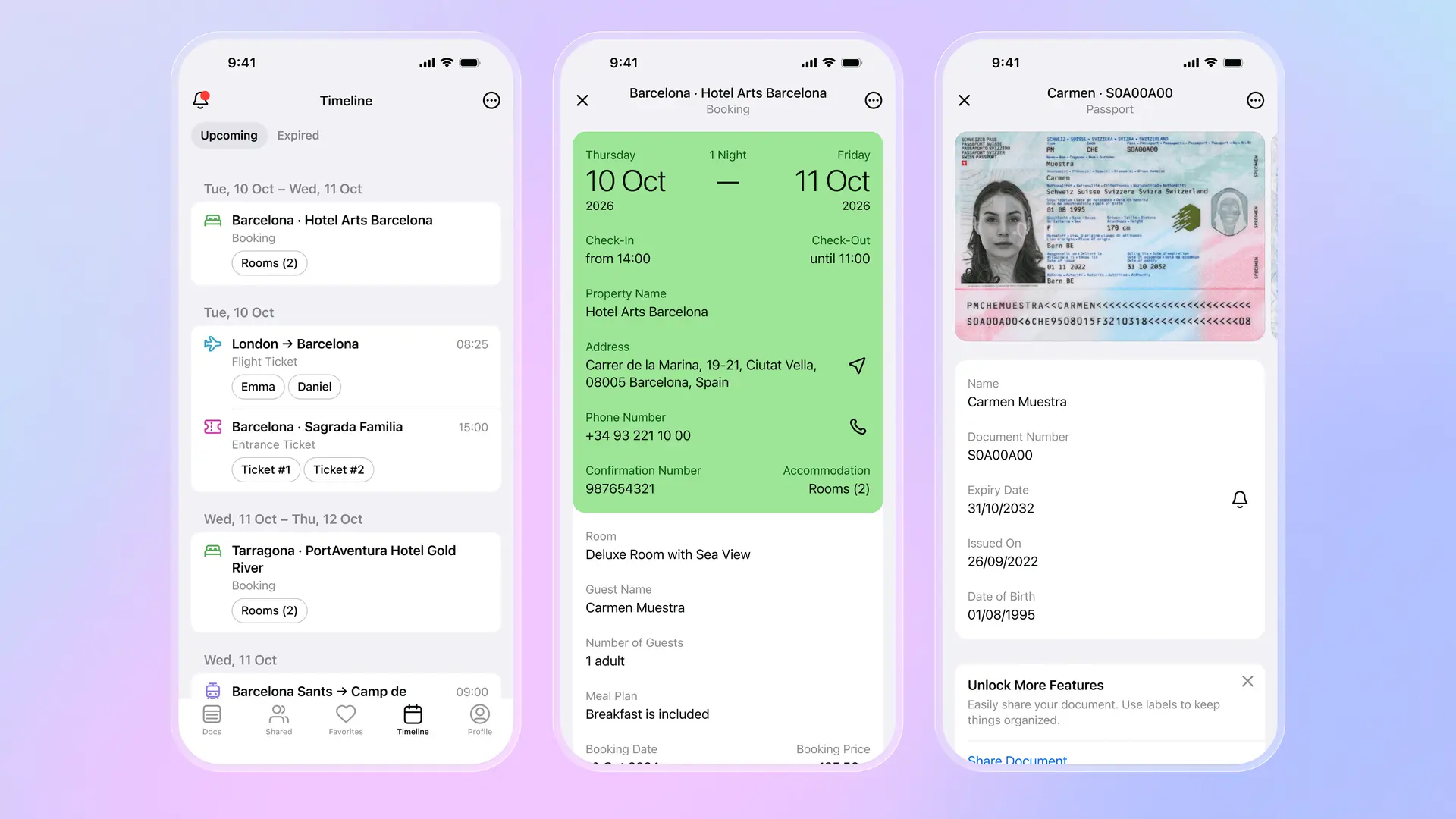
6. Buy an eSIM before landing. Roaming charges are brutal. A single day of data roaming from a US carrier in Europe can cost $10-15. An eSIM from Airalo, Holafly, or Nomad costs $5-15 for an entire week of data. Install it before you land, and you have connectivity the moment you step off the plane. No hunting for SIM card shops, no language barrier issues, no swapping physical cards.
7. Download offline maps for your entire destination. Google Maps lets you download entire regions for offline use. Do this on hotel WiFi the night before exploring. You get turn-by-turn navigation, public transit info, and restaurant details even in airplane mode. Crucial for subway systems (no signal underground), remote areas, and avoiding data costs. Download larger than you think you'll need.
8. Pack items with multiple uses. Specific examples that actually work: a large scarf (blanket on planes, beach cover-up, pillow, emergency bag), a dry bag (dirty laundry, beach waterproofing, rain protection for electronics), compression packing cubes (organize clothes, sit on to squeeze air out, keep wet items separate). Skip the "50 uses for a paperclip" nonsense. Focus on items you'll actually use twice.
9. Be genuinely kind at check-in counters. Let's be honest: being nice rarely gets you free upgrades. Airlines have strict rules about who gets bumped to business class. But kindness does make the whole experience better. Staff who deal with angry passengers all day will go further for someone pleasant: better seat assignments, flexibility on baggage, helpful rebooking when things go wrong. It's not a hack for freebies. It's a hack for a better travel experience.
10. Use points when cash prices are high, cash when they're low. Award prices and cash prices don't move together. A flight that costs 50,000 points or €400 in June might cost 50,000 points or €180 in October. Check both before booking. Use points when cash prices spike (holidays, events, peak season) and pay cash when prices drop. This simple flexibility can double the value you get from loyalty programs.
The hacks that don't work
Hidden city ticketing. The idea: book a cheaper flight with a connection in your actual destination, then skip the final leg. The reality: airlines actively detect this. They'll cancel your return flight, revoke loyalty miles, and potentially ban you. Lufthansa sued a passenger over this. It's not worth the risk.
Incognito mode for cheaper flights. The theory: airlines track your searches and raise prices when you show interest. The reality: multiple studies have tested this, and prices are the same in incognito mode. Airlines use dynamic pricing based on demand, not your individual browsing history. This hack wastes your time.
VPN to book from "cheaper" countries." The idea: prices vary by country, so use a VPN to appear in a cheaper market. The reality: your payment card reveals your actual location. Airlines often reject mismatched locations. When it does work, the savings are usually minimal and not worth the risk of booking issues or fraud flags on your card.
The best travel hacks aren't clever tricks. They're boring fundamentals: book early, stay flexible, back up your documents, travel in shoulder season. The flashy hacks that promise free upgrades and secret discounts usually don't work. The simple ones that save 30 minutes at the airport and €100 on hotels? Those actually do.
Download Folio Wallet
Available free on iOS and Android


Keep reading
Best identity verification platforms in 2025
Research
Dec 19, 2025
Best identity verification platforms in 2025
Research
Dec 19, 2025
The EU is giving everyone a digital ID wallet. Here's what that means.
Product
Oct 25, 2025
The EU is giving everyone a digital ID wallet. Here's what that means.
Product
Oct 25, 2025
How NFC chip scanning verifies your passport in seconds
Business
Oct 20, 2025
How NFC chip scanning verifies your passport in seconds
Business
Oct 20, 2025