Jun 9, 2025
BusinessClient onboarding best practices: digital vs traditional
Digital client onboarding transforms how businesses verify and activate new customers. Learn the key differences from traditional methods and best practices for implementing effective onboarding workflows.
You're opening a bank account. You fill out a form. You print it, sign it, scan it, email it. Then you wait. Three days later, someone asks for your utility bill. You dig through drawers, find a statement from two months ago, photograph it badly, send it again. Another two days pass. Finally, rejection: the document was too old. Start over.
This is still how millions of people experience onboarding in 2025. And every friction point costs businesses real money. Research shows that 68% of customers abandon applications that take longer than 20 minutes to complete. The average cost of manual onboarding in financial services is $23 per customer, compared to $3 for fully digital processes. Companies with the fastest onboarding in their sector acquire 40% more customers than their slower competitors.
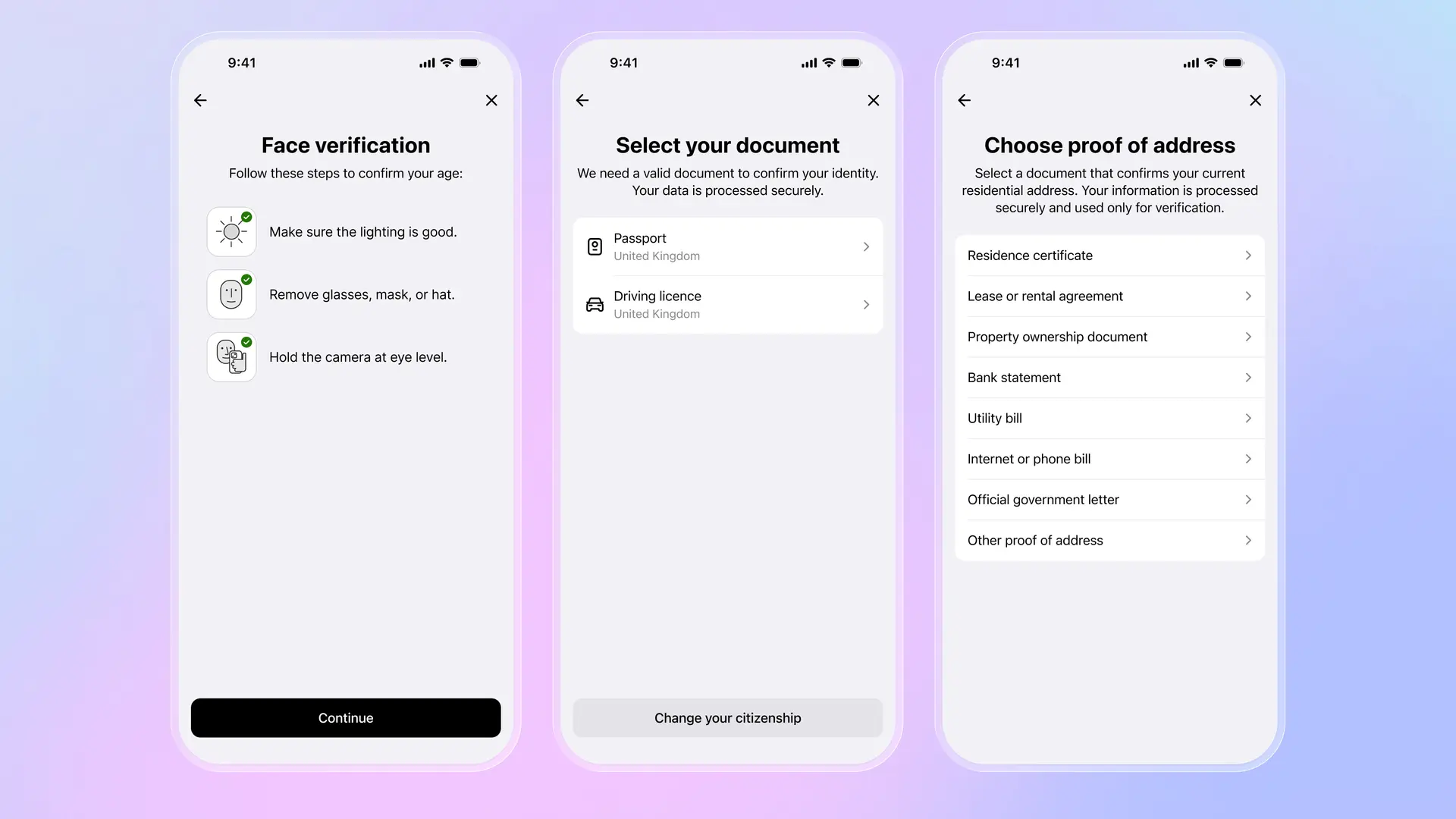
Digital onboarding changes everything. A customer opens an app at midnight, photographs their passport, takes a selfie, and receives approval in three minutes. No forms to print. No documents to mail. No waiting for someone to review a file on Monday morning. The technology that makes this possible has matured dramatically: AI reads documents accurately, biometric verification confirms identity reliably, and fraud detection catches sophisticated attacks that would fool human reviewers.
What traditional onboarding actually costs
The visible costs of manual onboarding are obvious: staff time, paper, postage, storage. But the hidden costs are larger. Every day a customer waits is a day they might sign up with a competitor instead. Every form field is a chance for typos that require correction later. Every human reviewer applies slightly different standards, creating inconsistent outcomes that frustrate customers and complicate compliance.
Traditional processes also create security gaps that digital systems eliminate. A staff member checking IDs for eight hours makes mistakes that machines don't. Sophisticated document forgeries that take experts to detect slip past tired eyes. And paper trails create their own risks: physical documents can be lost, stolen, or improperly disposed of. One UK bank discovered that 12% of their manually processed applications contained errors requiring follow-up, while their digital channel had an error rate below 1%.
How modern onboarding works
The best digital onboarding combines several verification steps into a seamless experience. First, document verification: the customer photographs their ID using their phone camera. The system reads the text, checks security features like holograms and microprinting, and validates the document against known templates for that document type. This happens in seconds, not days.
Next comes biometric verification. A selfie is compared against the photo on the ID to confirm the customer is the document holder. But a photo of a photo could fool a simple comparison, so liveness detection ensures the person is actually present: they might be asked to blink, turn their head, or the system analyzes subtle signals like skin texture and micro-movements that photographs and videos can't replicate. Modern liveness detection stops 99.9% of spoofing attempts.
Address verification confirms where the customer lives. They might upload a utility bill or bank statement, with AI extracting the address and checking it matches what they entered. Alternatively, database checks can verify addresses instantly without requiring any document at all. For higher-risk scenarios, background screening checks against sanctions lists, politically exposed persons databases, and adverse media to assess customer risk.
Designing flows that people actually complete
Technology alone doesn't guarantee good onboarding. Design matters enormously. The difference between 60% completion and 90% completion often comes down to how the experience feels. Good onboarding explains what's needed and why at each step. It shows examples of acceptable documents. It provides real-time feedback when a photo is blurry or poorly lit instead of rejecting the application hours later. It lets customers save progress and return later if they're interrupted.
Mobile-first design is essential: over 70% of digital onboarding now happens on smartphones. That means optimizing for phone cameras, touch interfaces, and intermittent connectivity. The best systems work offline for initial data collection, syncing when connection returns. They guide users through document photography with on-screen frames and automatic capture when the image quality is sufficient.
When things go wrong, good error handling makes the difference between a retry and an abandoned application. "Your document couldn't be verified" frustrates users. "We couldn't read the expiry date because of a shadow. Try photographing in brighter light with the document flat on a table" gives them a path forward. Every rejection should include a specific reason and clear instructions for fixing it.
Measuring what matters
Smart teams track specific metrics that reveal onboarding health. Completion rate shows what percentage of people who start actually finish. Anything below 70% indicates serious friction worth investigating. Time to completion matters both for customer experience and operational cost: the best consumer onboarding completes in under five minutes, while business onboarding with enhanced due diligence might take 15-20 minutes. First-attempt success rate reveals whether your guidance is clear enough, with leading companies achieving 85%+ success on the first try.
Fraud detection rate measures security effectiveness, but must be balanced against false positive rates. Catching more fraud is pointless if you're also rejecting legitimate customers. The best systems catch over 95% of fraudulent attempts while keeping false positives below 2%. Finally, customer satisfaction surveys reveal how onboarding affects the relationship. Poor onboarding experiences correlate strongly with early churn, even when customers successfully complete the process.
Industry-specific realities
Different sectors face different requirements. Financial services operate under strict KYC and AML regulations that mandate specific verification steps. But risk-based approaches allow streamlined onboarding for low-risk customers while applying enhanced due diligence where warranted. A student opening their first savings account doesn't need the same scrutiny as someone transferring large sums internationally.
Real estate combines identity verification with background checks for tenant screening. International buyers may require additional documentation and verification against foreign databases. Healthcare must verify patient identity to prevent medical identity theft while maintaining HIPAA compliance for data handling. Legal services need identity confirmation before engagement, often combined with conflict checks and electronic signature collection for engagement letters.
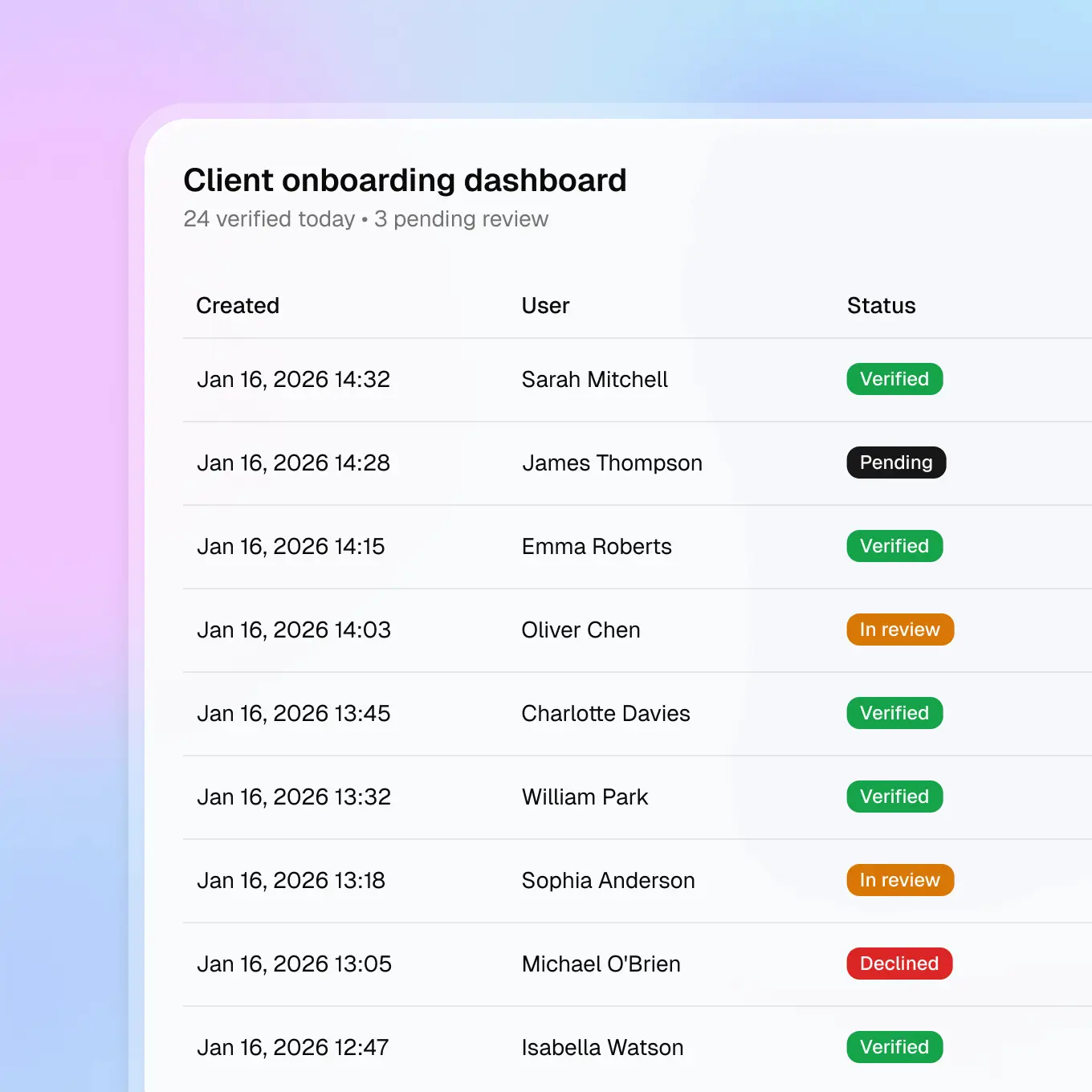
Folio's onboarding platform handles these variations through configurable verification workflows. Set the verification steps appropriate for your industry and risk level. Send customers a link; they complete verification from any device. You receive timestamped results with complete audit trails ready for regulatory review. The same technology that verifies a new banking customer can screen a rental applicant or confirm a patient's identity, adapting to each context while maintaining the smooth experience that drives completion rates.
The gap between good and bad onboarding grows wider every year. Customers now expect instant, mobile-friendly experiences. Regulators demand thorough verification with complete documentation. The companies that thrive are those that deliver both simultaneously: rigorous enough to satisfy compliance, seamless enough that customers actually complete the process. In a world where switching costs approach zero, onboarding isn't just an operational detail. It's a competitive advantage that compounds over time.
Client onboarding
Client verification that's fast, compliant, and audit-ready. Onboard clients remotely in minutes while meeting AML, KYC, and CDD requirements globally. Stop chasing documents and stay audit-ready around the clock.
Keep reading

Best identity verification platforms in 2025
Research
Dec 19, 2025
Best identity verification platforms in 2025
Research
Dec 19, 2025
The EU is giving everyone a digital ID wallet. Here's what that means.
Product
Oct 25, 2025
The EU is giving everyone a digital ID wallet. Here's what that means.
Product
Oct 25, 2025
How NFC chip scanning verifies your passport in seconds
Business
Oct 20, 2025
How NFC chip scanning verifies your passport in seconds
Business
Oct 20, 2025