Apr 22, 2025
BusinessFace matching technology: how businesses verify identity online
Face matching compares a live selfie to an ID photo to confirm identity. Learn how this technology works, where it's used, and what makes it different from face recognition.
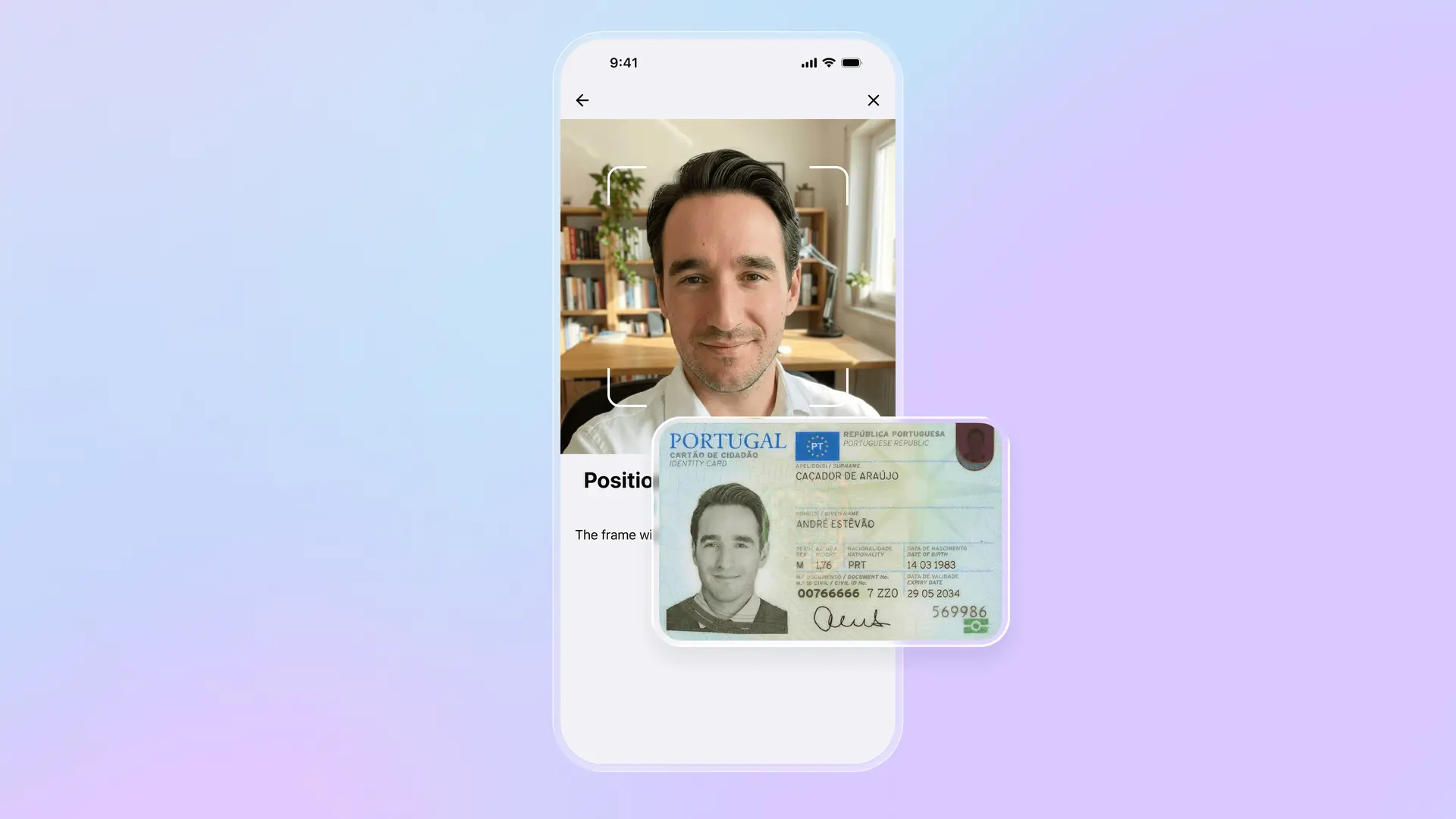
You're opening a bank account from your couch. You've uploaded photos of your driver's license, entered your personal details, and now comes the final step: the app asks you to take a selfie. Why? Because having your ID isn't enough. The bank needs to know that the person holding the ID is the same person pictured on it.
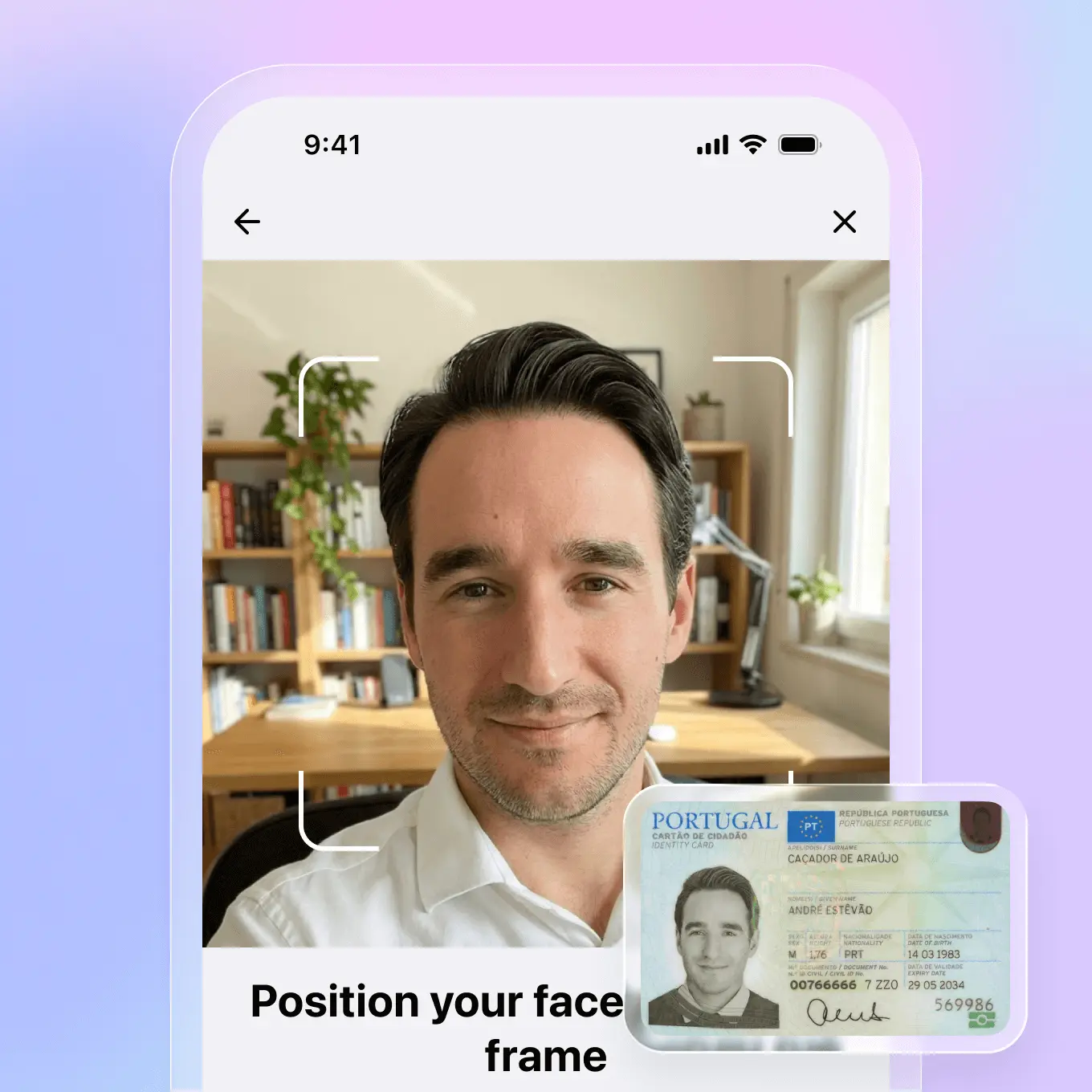
This is face matching: comparing your selfie to the photo on your ID to verify you're who you claim to be. It's the technology that makes remote identity verification possible, whether you're opening a bank account, signing up for a crypto exchange, or renting an apartment.
Face matching vs face recognition
These terms sound similar but work very differently, and the distinction matters for privacy.
Face recognition searches a database to identify an unknown person. Security cameras in a stadium might scan thousands of faces looking for matches against a watchlist. This technology can identify people without their knowledge or consent, which is why it faces heavy regulation or outright bans in many places.
Face matching is simpler and more privacy-friendly. It only compares two specific images: the selfie you just took and the photo on your ID. There's no database search, no surveillance. The system just answers one question: are these photos of the same person? You initiate the check yourself, and you consent to the comparison.
How it works
The concept is straightforward. You take a selfie, and the system extracts the photo from your ID document. It then analyzes both faces to create a "fingerprint" of facial features: the distance between your eyes, the shape of your jawline, the proportions of your face. Finally, it compares these fingerprints and calculates a similarity score.
If the score is high enough, you're verified. If not, you might be asked to try again with better lighting, or a human reviewer might take a look. Businesses can adjust how strict the matching is based on their needs: tighter security means fewer false matches but potentially more legitimate users getting rejected.
Why liveness detection matters
Face matching alone has a weakness: what if someone holds up a photo of the ID owner instead of their own face? Or plays a video? That's where liveness detection comes in.
Liveness detection confirms you're a real person, physically present, not a printed photo or a screen displaying a video. Modern systems analyze subtle cues like skin texture, micro-movements, and 3D depth to distinguish real faces from fakes. Some ask you to turn your head or blink. Others work passively without requiring any specific actions.
A fraudster might get their hands on a stolen ID and a photo of its owner. They're unlikely to pass liveness detection. This combination of face matching and liveness creates a much stronger verification than either could provide alone.
Challenges the technology handles
Your ID photo might be five years old. You may have grown a beard, changed your hairstyle, or simply aged. The photo on your ID was probably taken in a government office with harsh fluorescent lighting, while your selfie comes from your phone's front camera in your living room. These differences make the comparison harder, but good face matching systems account for them.
Fairness is another consideration. Early face matching systems performed worse for people with darker skin tones. Modern systems trained on diverse datasets have largely addressed this, but companies deploying face matching should test for accuracy across different demographic groups.
Where you'll encounter it
Face matching has become standard wherever businesses need to verify identity remotely. Banks and fintech apps use it when you open accounts or apply for loans. Crypto exchanges require it before you can trade or withdraw funds. Telehealth platforms verify patients before prescribing medications. Government services from voter registration to benefits applications rely on it to prevent fraud. Even gig economy platforms use face matching to verify drivers and renters, building trust between strangers.
The common thread: any situation where someone needs to prove they're the person on an ID document, without being physically present to show that ID to a human.
The complete verification picture
Face matching works best as one layer in a complete verification workflow. First, verify the ID document itself is genuine by checking security features and detecting tampering. Then confirm the person is physically present with liveness detection. Finally, compare their face to the ID photo. Each layer catches different types of fraud, and together they create strong protection against identity theft.
Match faces with certainty
Exceptional accuracy delivered with privacy, transparency and a seamless user experience.
Keep reading
Best identity verification platforms in 2025
Research
Dec 19, 2025
Best identity verification platforms in 2025
Research
Dec 19, 2025
The EU is giving everyone a digital ID wallet. Here's what that means.
Product
Oct 25, 2025
The EU is giving everyone a digital ID wallet. Here's what that means.
Product
Oct 25, 2025
How NFC chip scanning verifies your passport in seconds
Business
Oct 20, 2025
How NFC chip scanning verifies your passport in seconds
Business
Oct 20, 2025