Apr 12, 2024
ResearchRegular vs digital wallets: which is right for you?
Explore the differences between regular and digital wallets. Compare pros, cons, and features to choose the right wallet solution for your lifestyle.
You're at a coffee shop, ready to pay. You reach for your pocket and realize your wallet is sitting on your kitchen counter. If you had your cards stored digitally, you'd tap your phone and move on with your day. That moment captures the core trade-off between physical and digital wallets: one is tangible and familiar, the other is always with you (as long as your phone is charged).
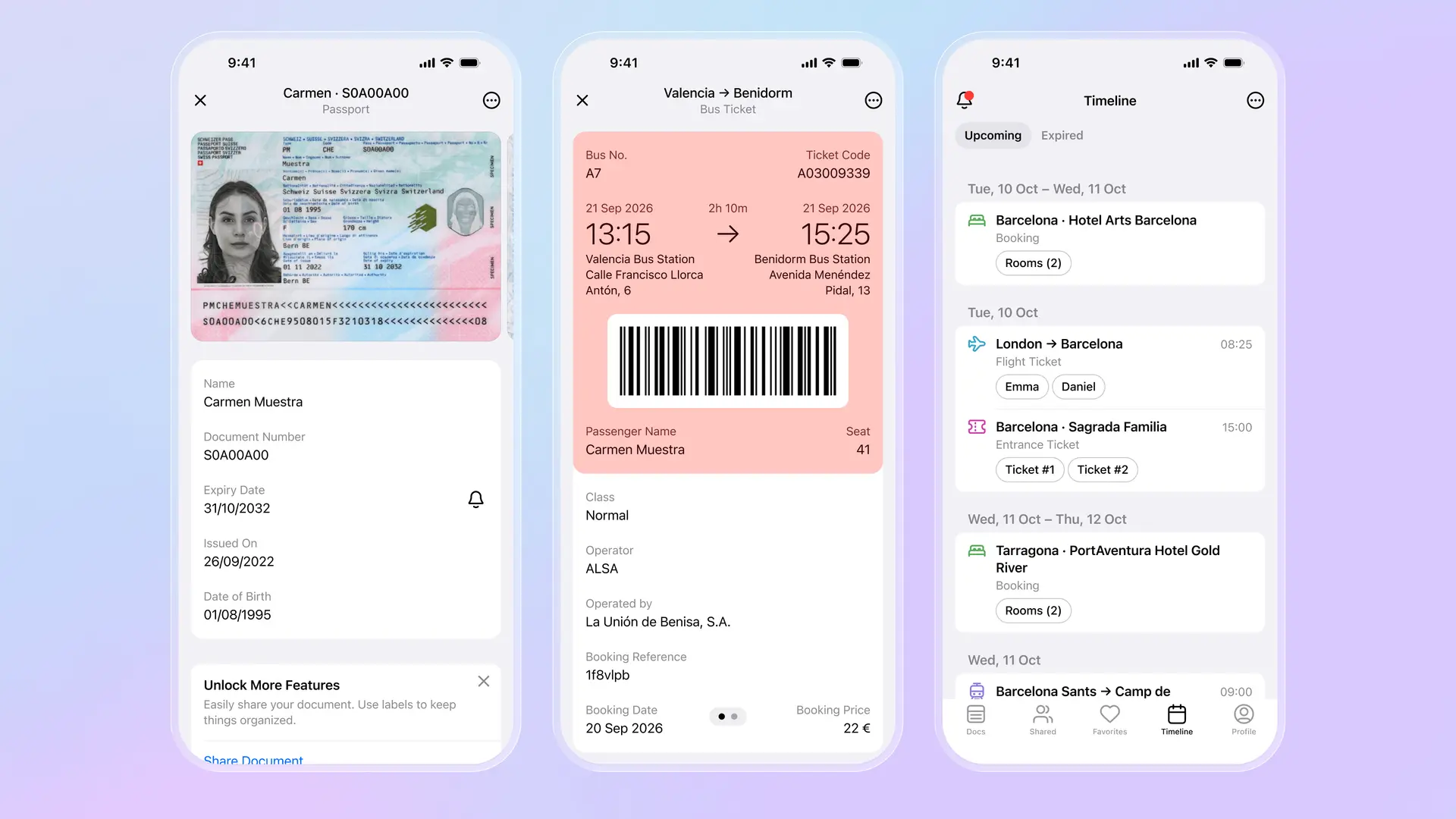
A physical wallet is straightforward. It holds cash, cards, your driver's license, maybe a photo or two. No battery required, no learning curve. But it has limits: lose it, and you lose everything inside. Stuff it with loyalty cards and receipts, and it becomes a brick in your pocket. A digital wallet lives on your phone. Apps like Apple Wallet, Google Wallet, and Folio store your payment cards, IDs, boarding passes, loyalty cards, and documents in one place. You can access most of them offline, and if your phone is lost, you can remotely lock access or wipe the data.
How they compare
Security: This is where digital wallets pull ahead. A stolen physical wallet means stolen cards and cash. A stolen phone? Your wallet app is locked behind Face ID, fingerprint, or a passcode. Modern apps like Folio add end-to-end encryption, so even if someone accessed your device, your sensitive data remains protected. You can also freeze cards instantly through banking apps if something goes wrong.
Convenience: Physical wallets work anywhere, anytime, with no battery anxiety. Digital wallets shine when you're juggling multiple cards, loyalty programs, or travel documents. Instead of flipping through a stack of plastic, you search or scroll. Folio even extracts text from documents automatically, so you can copy your passport number without digging through a folder.
Acceptance: Not every merchant takes Apple Pay or Google Pay. Some places are still cash-only. Physical wallets remain essential for those situations. But the gap is closing fast, especially in cities and developed markets where contactless payment is nearly universal.
Organization: A physical wallet gets cluttered. A digital wallet stays organized. You can categorize cards, set expiration reminders, and archive old documents without adding bulk. Folio lets you create folders for travel, health, finance, or whatever system works for you.
The practical answer
Most people don't need to choose one or the other. The smart approach is a slim physical wallet for emergencies (some cash, one or two backup cards) and a digital wallet for everything else. Your phone handles daily payments, loyalty cards, boarding passes, and document storage. Your physical wallet stays light and acts as a backup.
If you travel frequently, manage multiple loyalty programs, or just hate carrying a bulky wallet, going mostly digital makes sense. If you live in an area where cash is still king or you're uncomfortable with technology, a physical wallet remains perfectly practical. There's no wrong answer, just the one that fits how you actually live.
Download Folio Wallet
Available free on iOS and Android


Keep reading
Best identity verification platforms in 2025
Research
Dec 19, 2025
Best identity verification platforms in 2025
Research
Dec 19, 2025
The EU is giving everyone a digital ID wallet. Here's what that means.
Product
Oct 25, 2025
The EU is giving everyone a digital ID wallet. Here's what that means.
Product
Oct 25, 2025
How NFC chip scanning verifies your passport in seconds
Business
Oct 20, 2025
How NFC chip scanning verifies your passport in seconds
Business
Oct 20, 2025